
Creating living fences is a refreshing way to enhance your outdoor space while providing natural privacy and charm. These green barriers, made from plants and shrubs, not only serve as effective borders but also contribute to biodiversity. Whether you’re looking to define your property line or simply want to enjoy some greenery, crafting a living fence is a fun and rewarding project that adds character to your yard.
Incorporating Edible Plants
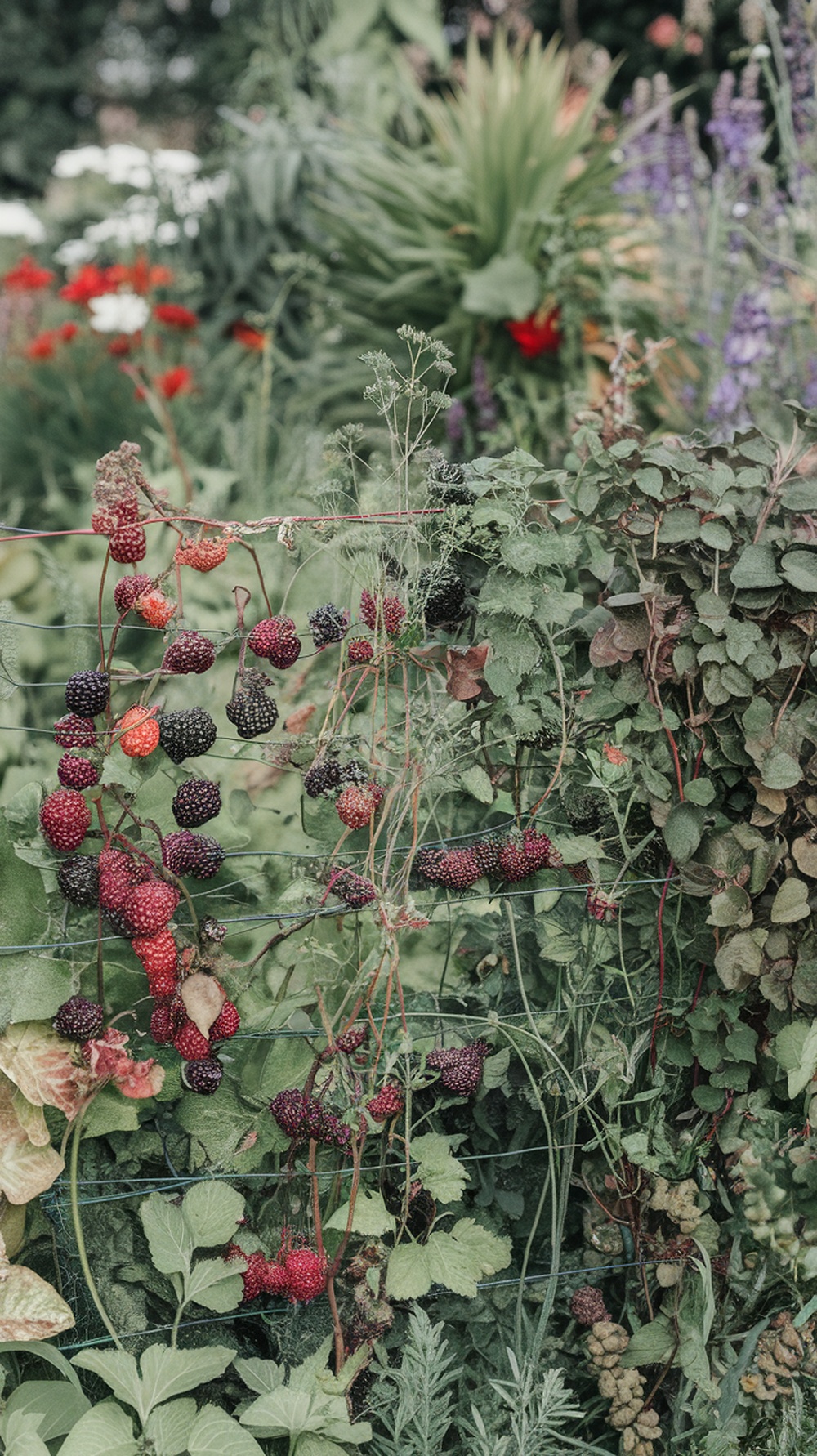
Living fences can be both beautiful and functional. Imagine a fence that not only provides privacy but also offers delicious treats. The image shows vibrant berries growing along a trellis, showcasing how edible plants can enhance your garden’s aesthetics.
Using plants like berries, herbs, or even climbing vegetables can create a lush barrier. These plants not only look great but also attract beneficial insects. Plus, you get to enjoy fresh snacks right from your garden!
When choosing edible plants, consider their growth habits and how they will fit into your space. Some plants may need more sunlight, while others thrive in partial shade. Planning ahead ensures a thriving living fence that serves multiple purposes.
Don’t forget to mix in some colorful flowers or aromatic herbs. This adds visual interest and can deter pests naturally. A living fence can be a feast for the eyes and the palate!
Maintenance Tips for Healthy Growth
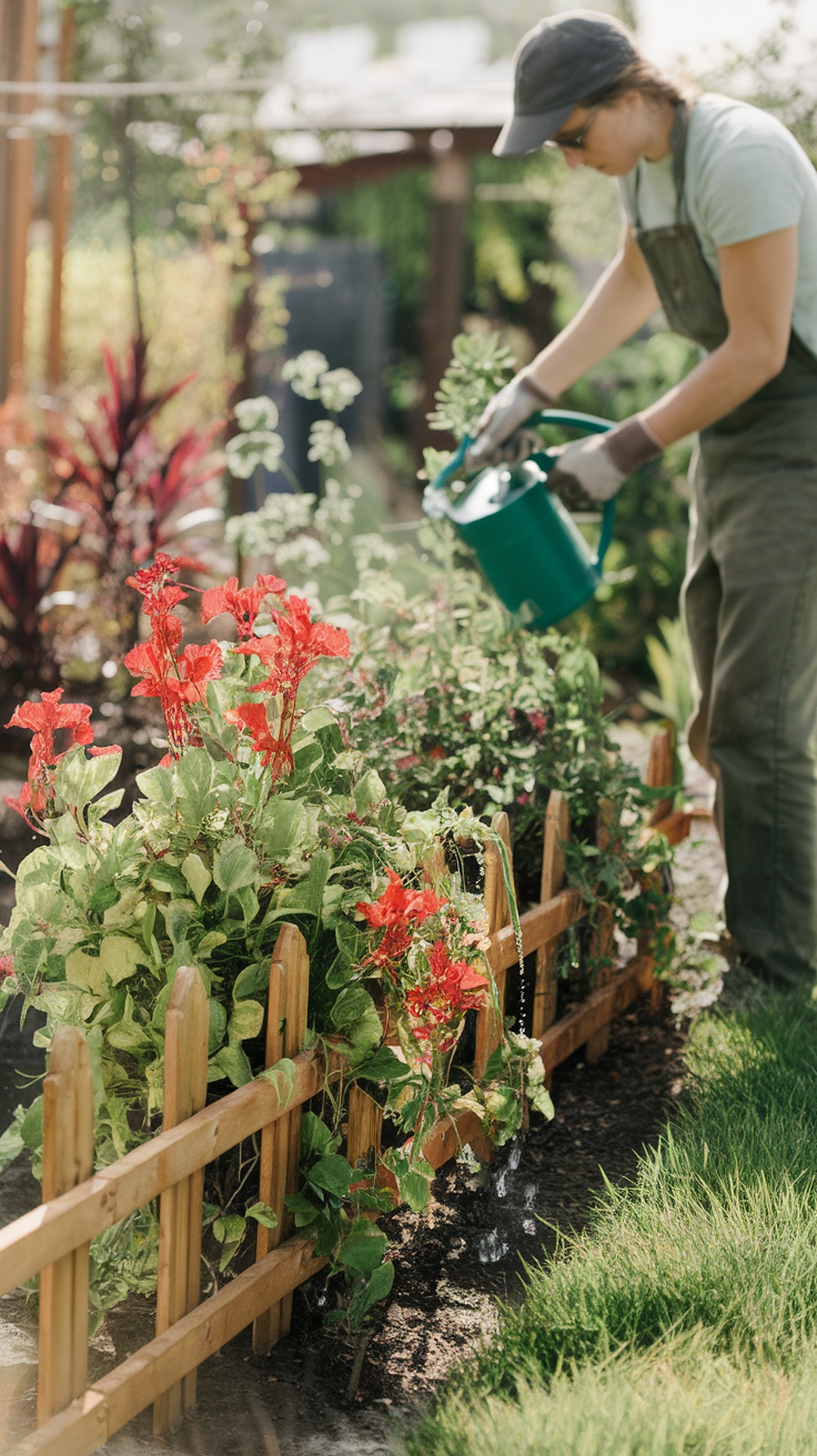
Creating a living fence is a fantastic way to enhance your garden while providing privacy and beauty. To keep your living fence thriving, regular maintenance is key. The image shows someone watering vibrant flowers in a garden, which highlights the importance of hydration for plant health.
Watering is essential, especially during dry spells. Make sure to give your plants enough water to encourage deep root growth. A good rule of thumb is to water them deeply once a week, allowing the soil to dry out slightly between waterings.
Pruning is another important task. Trim back any overgrown branches or dead leaves to promote healthy growth. This helps your plants get enough sunlight and air circulation, which is vital for their development.
Fertilizing your living fence can also boost its health. Use a balanced fertilizer during the growing season to provide essential nutrients. This will help your plants flourish and produce beautiful blooms.
Lastly, keep an eye out for pests. Regularly check your plants for any signs of trouble. If you spot any pests, act quickly to manage them before they cause significant damage.
Choosing the Right Plants
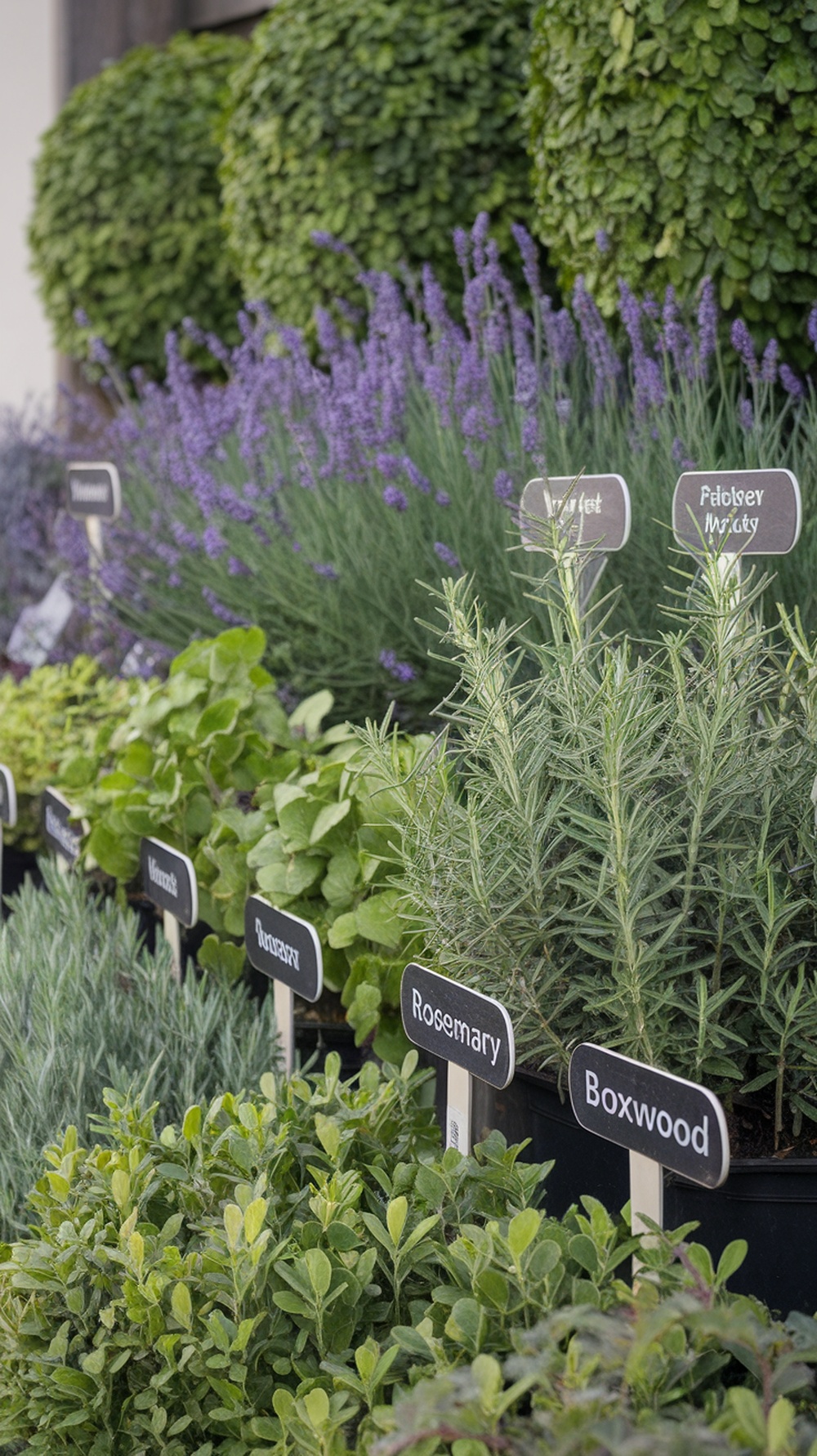
Creating a living fence is a fun and practical way to enhance your outdoor space. The right plants can provide privacy, beauty, and even attract wildlife. In the image, you can see a variety of plants, including lavender, rosemary, and boxwood, all labeled for easy identification.
When selecting plants for your living fence, think about your local climate and soil type. Some plants thrive in sunny spots, while others prefer shade. For example, lavender loves the sun and can add a lovely fragrance to your garden. On the other hand, boxwood is great for creating a dense, evergreen barrier.
Herbs like rosemary and mint not only look good but can also be useful in the kitchen. Imagine having fresh herbs just a few steps away! Consider mixing ornamental plants with functional ones to create a living fence that serves multiple purposes.
Don’t forget about maintenance. Some plants require more care than others. Choose varieties that fit your lifestyle. If you prefer low-maintenance options, opt for hardy plants that can withstand various weather conditions.
Designing Your Living Fence Layout
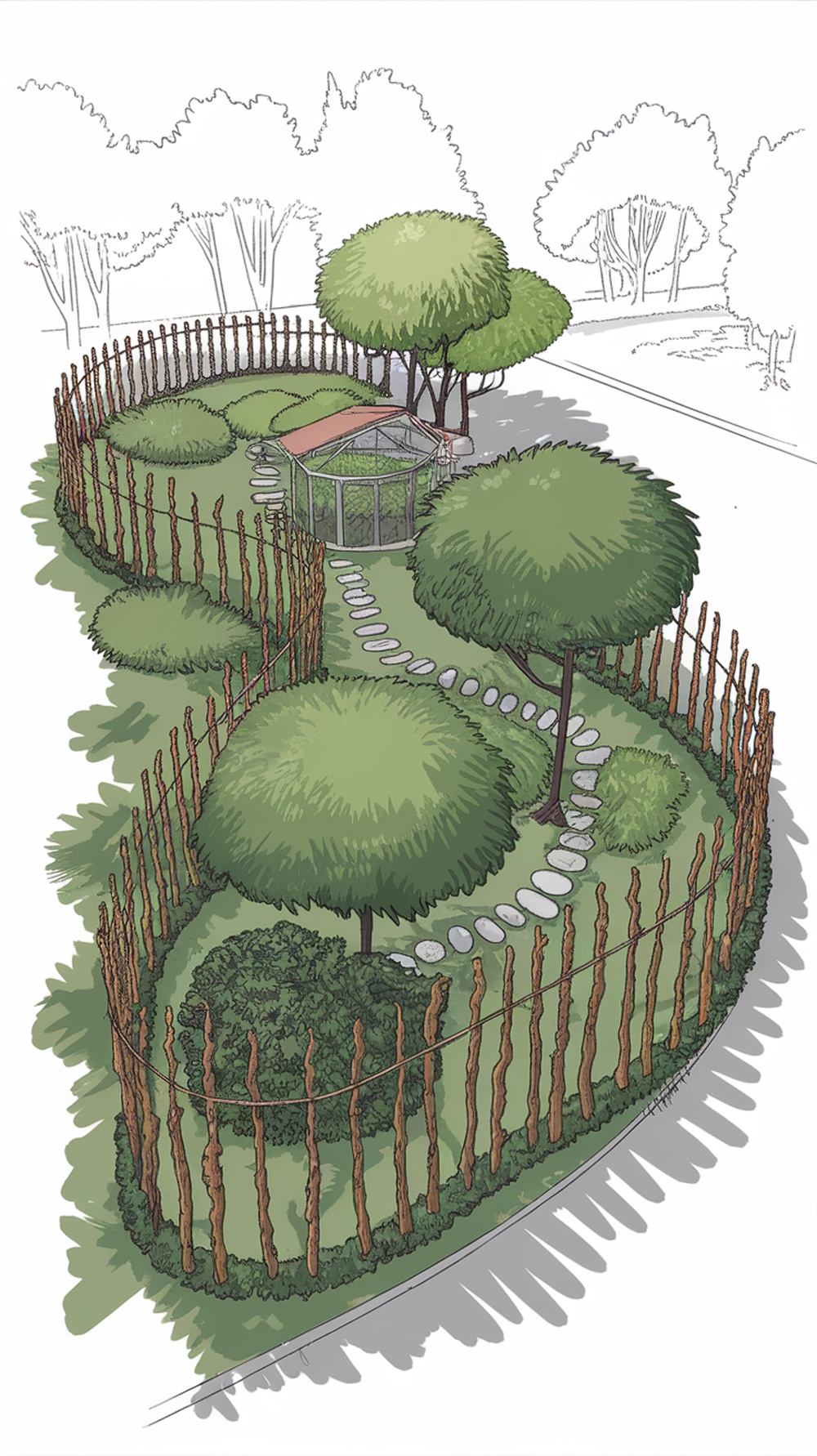
Creating a living fence is a fun way to enhance your garden while providing privacy and beauty. The image shows a well-thought-out layout for a living fence. Notice how the design features a winding path surrounded by lush greenery and a sturdy fence made of natural materials.
The layout is key to a successful living fence. Start by thinking about the shape and size of your space. The curved lines in the image create a soft, inviting look. You can mimic this by avoiding straight lines and opting for gentle curves.
Next, consider the plants you want to use. The image suggests a mix of trees and shrubs, which can provide different heights and textures. This variety adds visual interest and helps create a natural habitat for wildlife.
Don’t forget about access! The path shown in the image allows easy movement through the garden. Make sure to include pathways that lead to different areas of your yard. This makes maintenance easier and encourages you to enjoy your outdoor space.
Finally, think about how your living fence will change over time. Plants grow and evolve, so plan for their future size. This foresight will help you maintain a beautiful and functional living fence for years to come.
Seasonal Care for Living Fences
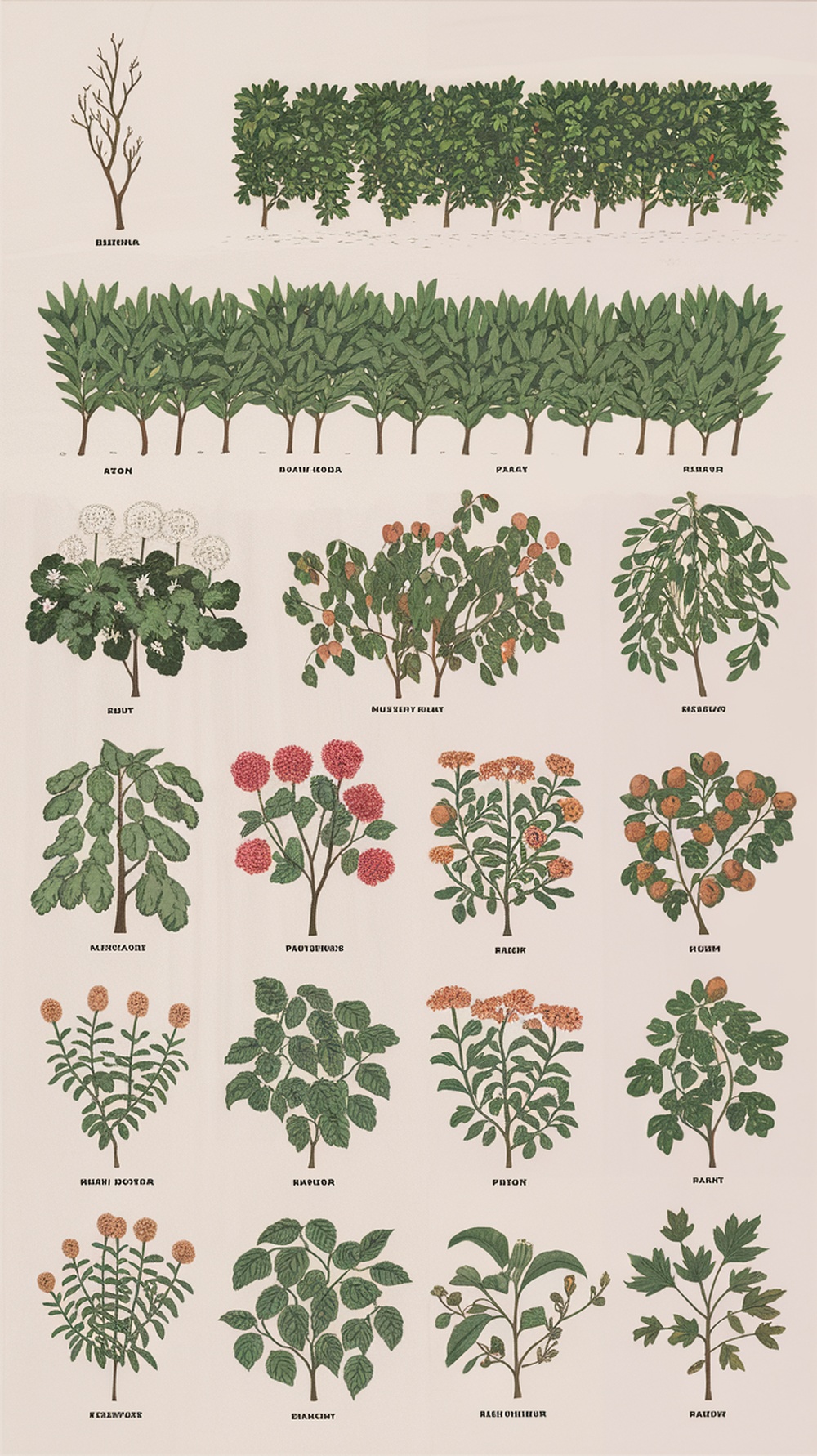
Living fences are a beautiful way to create boundaries while adding greenery to your space. They consist of plants that grow closely together, forming a natural wall. Seasonal care is key to keeping these fences healthy and vibrant.
In spring, it’s time to prune. Trim back any dead or overgrown branches. This helps promote new growth and keeps the fence looking neat. Fertilizing during this time can also give your plants a boost as they come out of dormancy.
Summer is all about maintenance. Watering is crucial, especially in hot months. Make sure your plants get enough moisture to thrive. Check for pests and diseases regularly, as they can spread quickly in warm weather.
As fall approaches, it’s a good idea to prepare your living fence for winter. Mulching can help protect the roots from cold temperatures. You might also want to cut back any dead foliage to keep the plants healthy.
Winter care varies by plant type. Some may need extra protection from frost. Covering them with burlap or using frost cloth can help. Always research your specific plants for the best winter care practices.
Creating Privacy with Living Fences
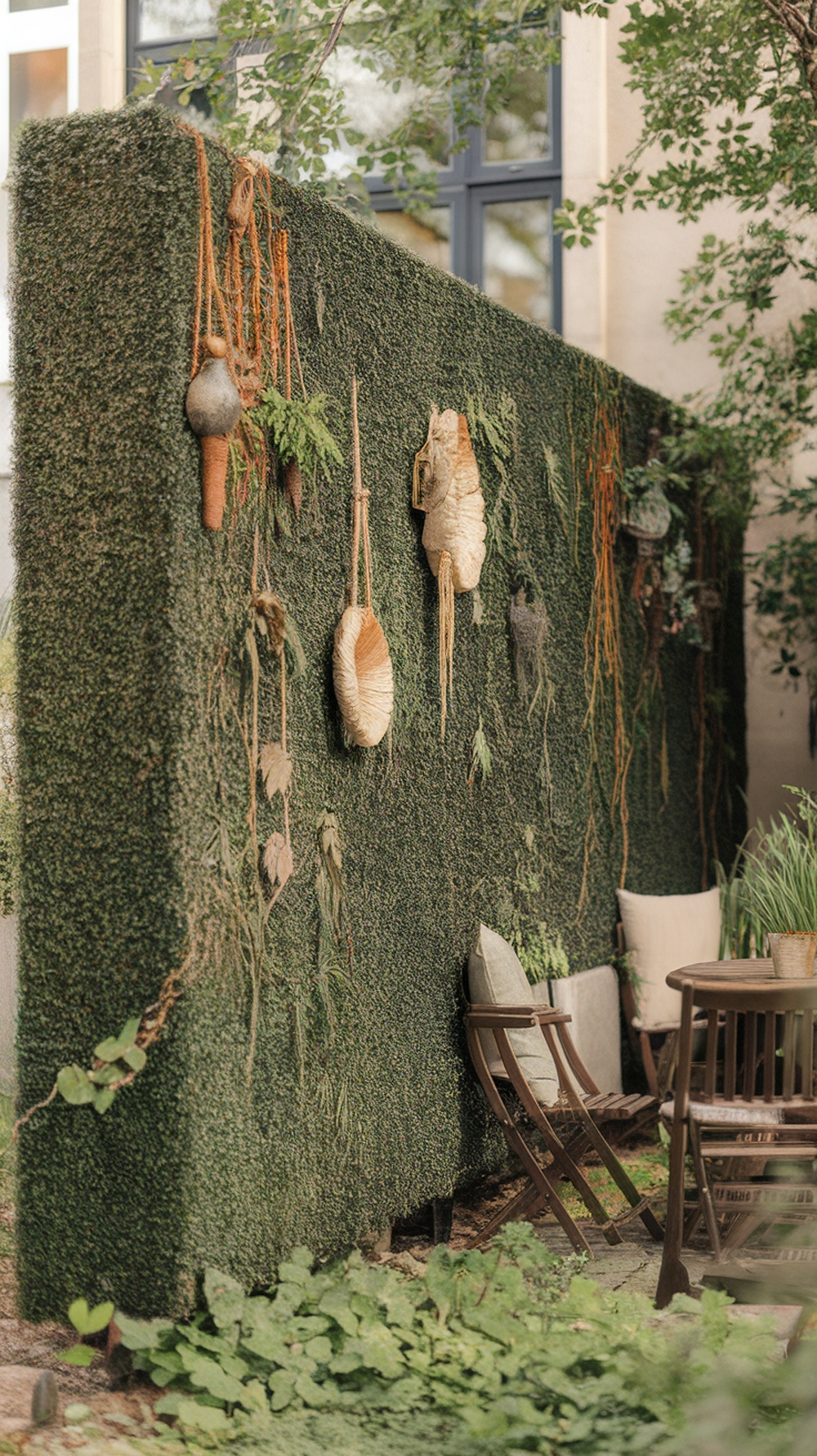
Living fences are a fantastic way to create privacy in your outdoor space. The image shows a lush green wall that acts as a natural barrier. This kind of fence not only provides seclusion but also adds beauty to your garden.
The vibrant greenery creates a calming atmosphere. You can see various decorative elements hanging on the wall, which adds character and charm. These details make the living fence feel more inviting and personal.
Using plants for privacy is eco-friendly and can enhance your yard’s appeal. You can choose from a variety of plants, like shrubs or climbing vines, depending on your style and needs. This approach allows you to enjoy your outdoor area without feeling exposed.
Creating a living fence can be a fun project. It involves selecting the right plants, planning their layout, and maintaining them over time. With a little effort, you can transform your space into a private retreat.
Wildlife-Friendly Living Fences
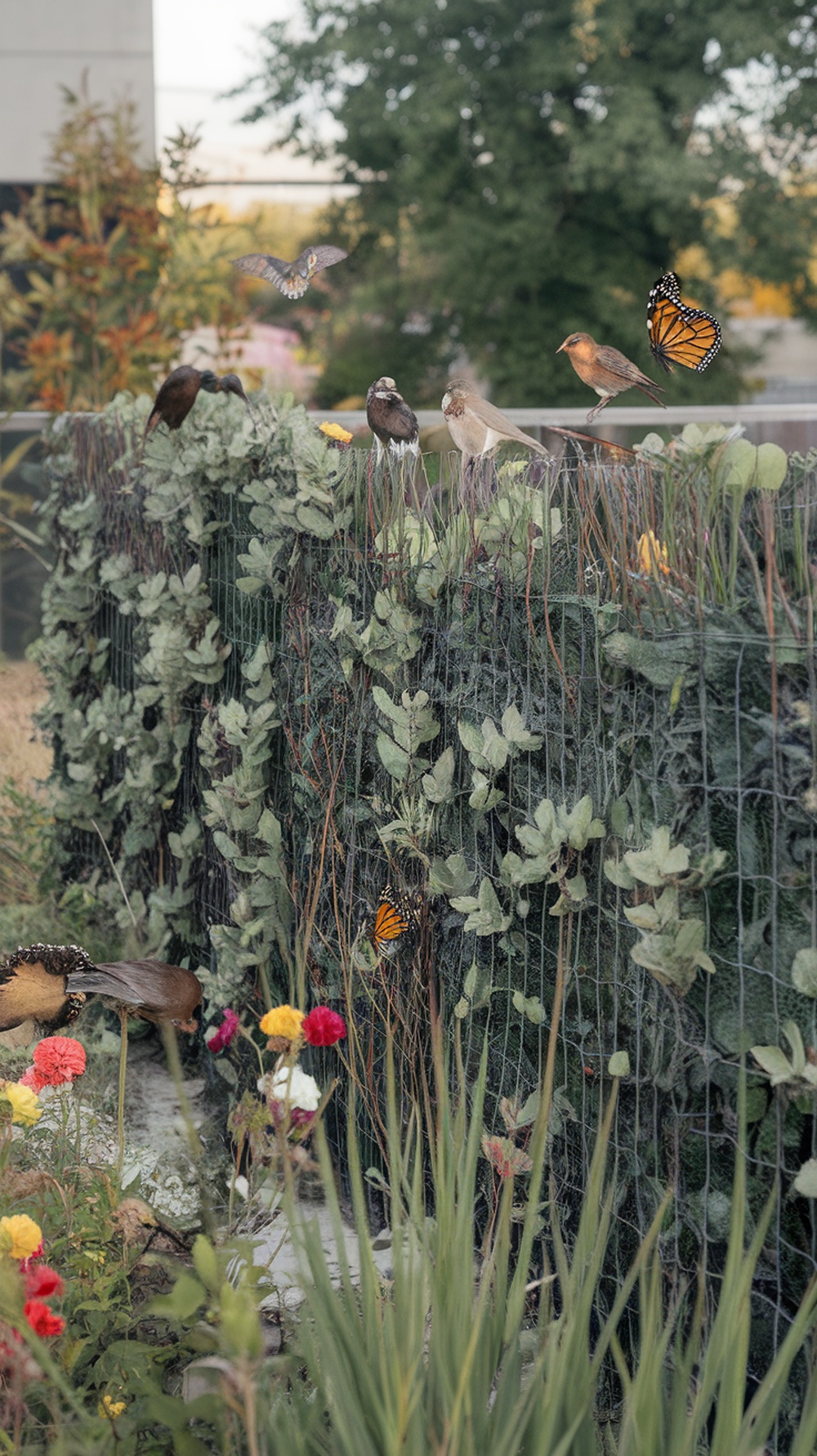
Living fences are a fantastic way to create a natural barrier while inviting wildlife into your garden. The image shows a vibrant scene where various birds and butterflies are enjoying the lush greenery of a living fence. This type of fence not only serves as a boundary but also provides a habitat for many creatures.
In the picture, you can see colorful flowers blooming at the base, attracting pollinators and adding beauty to the space. The birds perched on the fence are likely enjoying the safety it offers while searching for food. Living fences can be made from a variety of plants, which helps support local ecosystems.
Using native plants in your living fence is a great choice. They require less maintenance and are more beneficial for local wildlife. By planting a mix of shrubs and flowering plants, you can create a dynamic environment that changes with the seasons. This not only enhances your garden’s appeal but also encourages biodiversity.
Overall, wildlife-friendly living fences are a win-win. They provide privacy and security while also nurturing the environment. So, if you’re looking to enhance your outdoor space, consider planting a living fence that welcomes wildlife!
Benefits of Living Fences
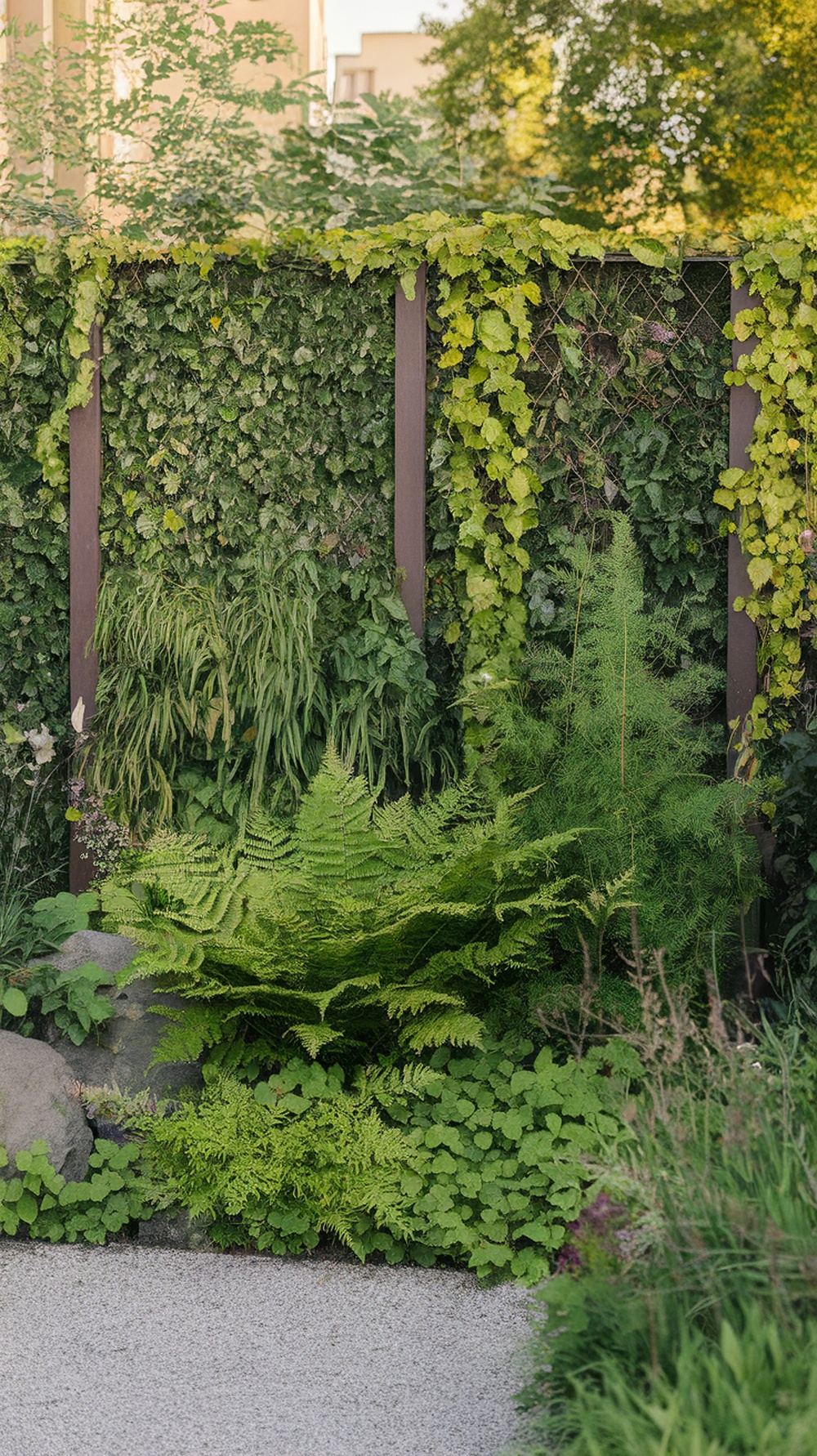
Living fences, like the one shown in the image, offer a natural and beautiful way to define spaces. This green barrier not only looks great but also brings several benefits to your garden or property.
One major advantage is privacy. The dense foliage creates a natural screen, making it harder for onlookers to see into your yard. This can be especially nice in urban areas where homes are close together.
Living fences also provide habitat for wildlife. Birds, insects, and other small creatures can thrive in these green spaces. This helps promote biodiversity and can make your garden feel more alive.
Another benefit is the environmental impact. Plants absorb carbon dioxide and produce oxygen, contributing to a healthier atmosphere. They can also help with soil erosion and improve air quality.
Maintenance is often easier with living fences compared to traditional ones. With the right plants, you can create a low-maintenance option that requires less upkeep over time. Plus, they can be pruned and shaped to fit your style.
Lastly, living fences can enhance the overall beauty of your property. The lush greenery adds color and texture, making your outdoor space more inviting. Whether you choose flowering plants or evergreen varieties, there’s a living fence option for every taste.
Cost-Effective Solutions for Living Fences
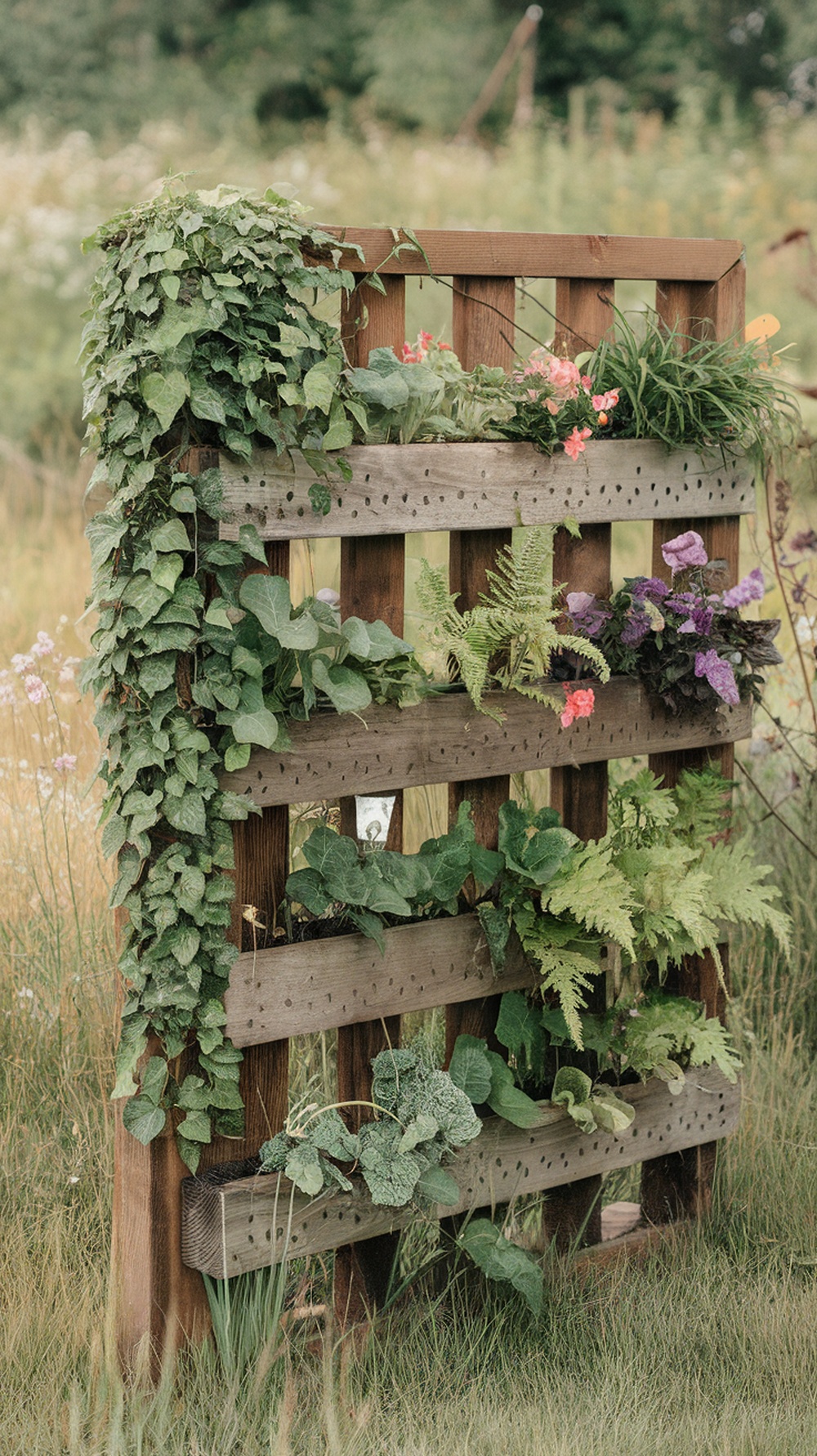
Living fences can be a great way to add beauty and privacy to your yard without breaking the bank. The image shows a wooden structure filled with vibrant plants and flowers. This type of setup not only looks appealing but also serves as a natural barrier.
Using pallets or wooden frames is a smart choice for creating a living fence. They are often inexpensive and can be found at local hardware stores or even repurposed from old furniture. The plants growing in this structure, like ivy and ferns, are easy to maintain and can thrive in various conditions.
Another benefit of living fences is their ability to improve air quality and provide habitats for local wildlife. By choosing native plants, you can create a sustainable environment that supports local ecosystems. Plus, they can be a fun DIY project for anyone looking to enhance their outdoor space.
Incorporating a mix of flowers and greenery not only adds color but also allows for seasonal changes in your garden. This way, your living fence can look different throughout the year, keeping your yard fresh and lively.
Using Native Plants for Sustainability
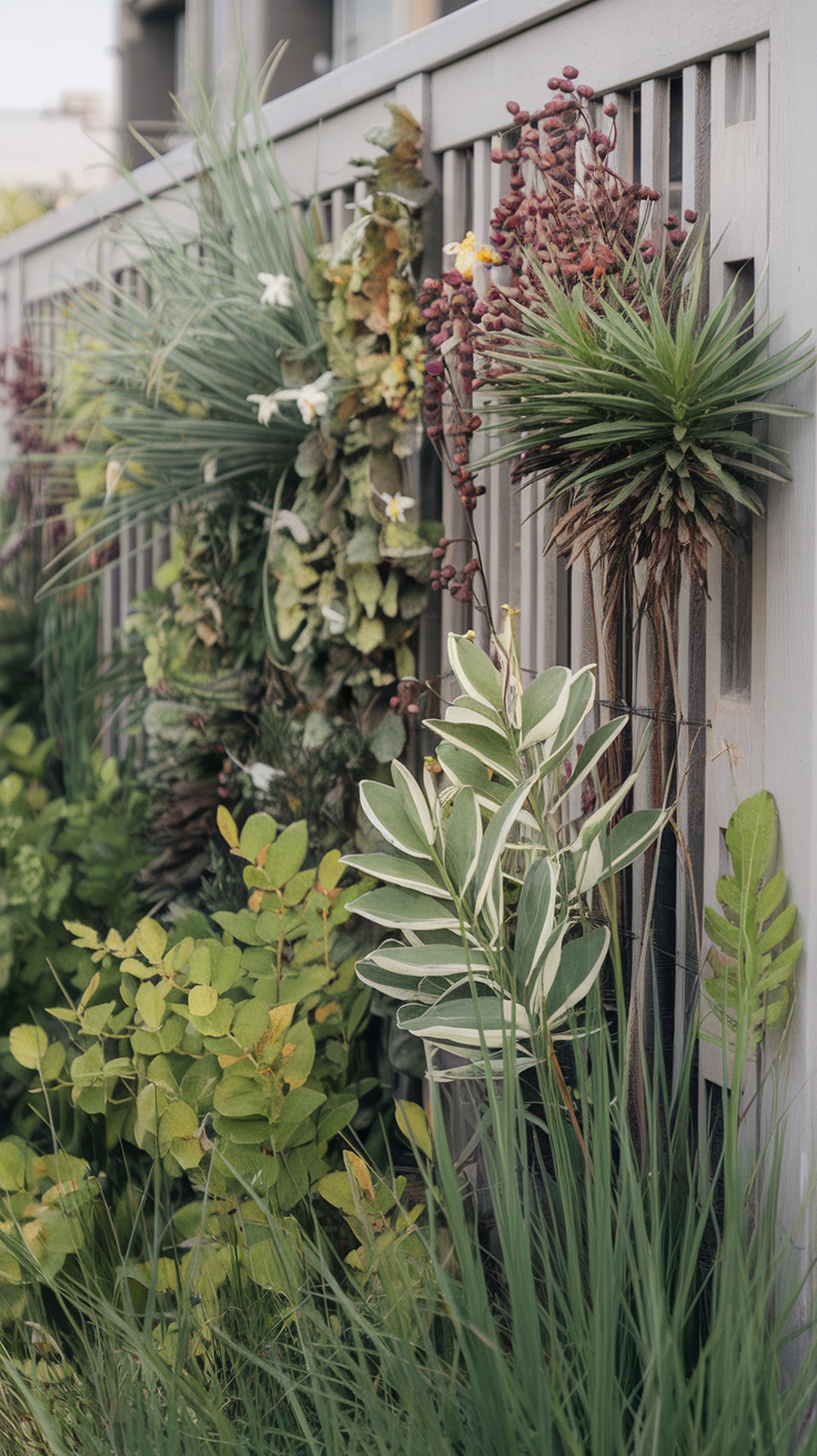
Living fences are a fantastic way to create natural barriers while enhancing your garden’s beauty. The image shows a vibrant mix of native plants growing against a wooden fence. These plants not only look great, but they also support local wildlife and help maintain the ecosystem.
Choosing native plants for your living fence is a smart move. They are adapted to your local climate, which means they require less water and care. This makes them a sustainable choice for any garden. In the image, you can see various textures and colors, showcasing how diverse native plants can be.
Planting native species can also attract beneficial insects and birds. This helps with pollination and pest control, creating a balanced environment. The lush greenery in the photo highlights how these plants can thrive together, forming a beautiful and functional living fence.
Incorporating native plants into your living fence is not just good for the environment; it also adds character to your outdoor space. Whether you want a simple border or a more elaborate design, native plants can help you achieve your vision while promoting sustainability.
Seasonal Color Changes in Living Fences

Living fences are a beautiful way to add character to your garden. They change with the seasons, offering a vibrant display of colors throughout the year. In the image, you can see a stunning mix of colors, from bright white flowers to deep greens and fiery oranges. This variety creates a lively backdrop that enhances any outdoor space.
In spring, the white flowers bloom, bringing a fresh and cheerful look. As summer rolls in, the greens become lush and full, providing a natural privacy screen. Then, as autumn approaches, the leaves transform into warm shades of orange and red, creating a cozy atmosphere. Finally, winter brings a quieter scene, with the bare branches and muted colors offering a calm, serene view.
These seasonal changes not only add beauty but also attract various wildlife. Birds and butterflies are often drawn to the flowers in spring and summer, making your living fence a hub of activity. Plus, the changing colors can inspire you to plant different flowers and plants nearby, creating a harmonious garden.
Innovative Ideas for Living Fence Designs
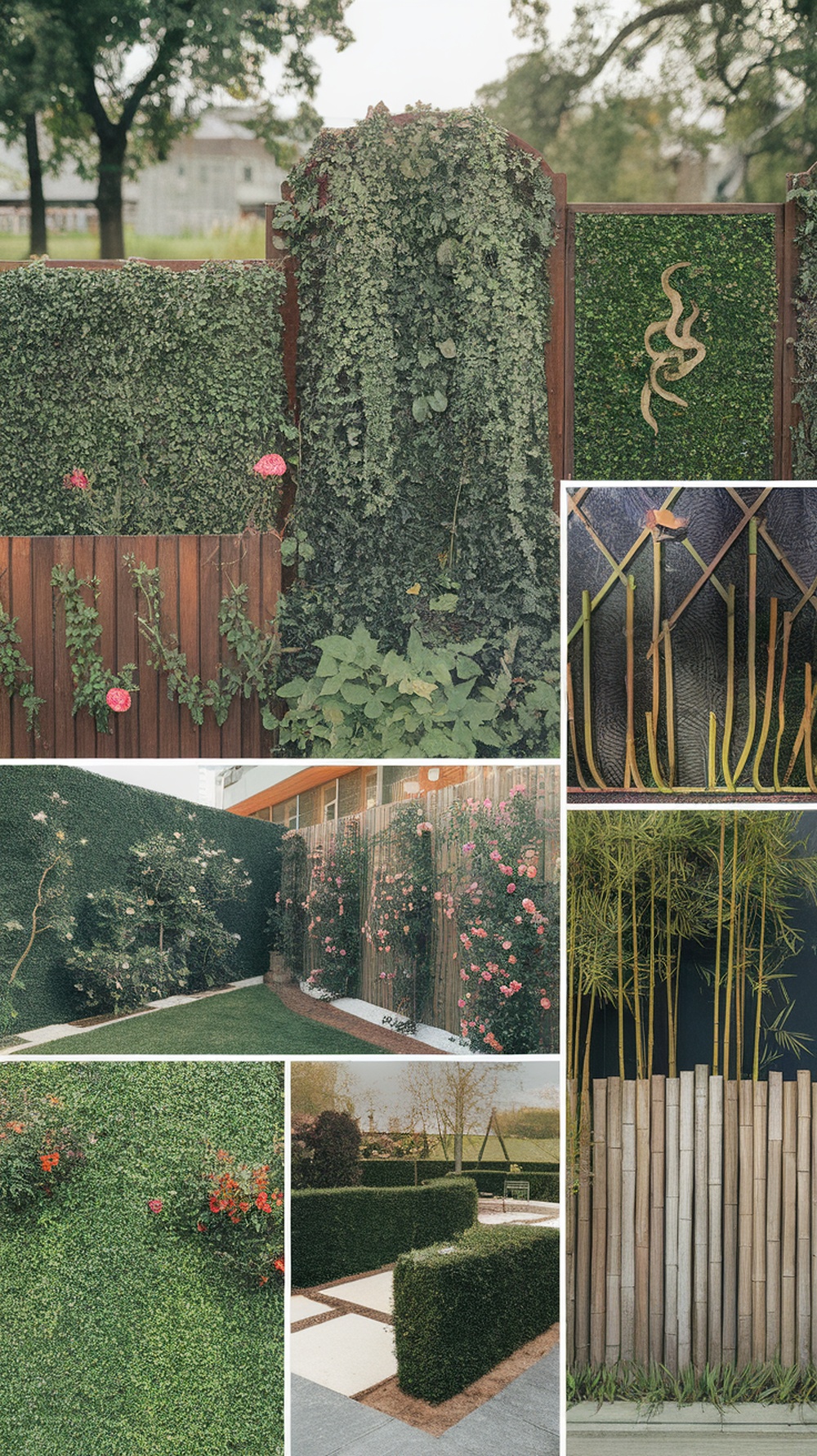
Living fences are a fantastic way to add beauty and privacy to your outdoor space. The image showcases a variety of creative designs that can inspire your own living fence project. From lush greenery to artistic arrangements, these ideas highlight how nature can enhance your garden.
One striking feature is the use of climbing plants. They can cover wooden structures, creating a natural wall that blends seamlessly with the environment. The cascading vines and colorful flowers add a touch of charm and vibrancy.
Another interesting approach is the combination of different materials. For instance, bamboo and wood can be used together to create a unique texture. This not only looks great but also provides a sturdy barrier.
Incorporating flowers into the design can bring in pops of color. The image shows how roses and other blooms can be integrated into the fence, making it not just a boundary but a focal point in the garden.
Lastly, consider the layout. The arrangement of plants and materials can create different levels and shapes, adding depth to your space. A well-planned living fence can transform your yard into a serene retreat.
Combining Living Fences with Other Garden Features
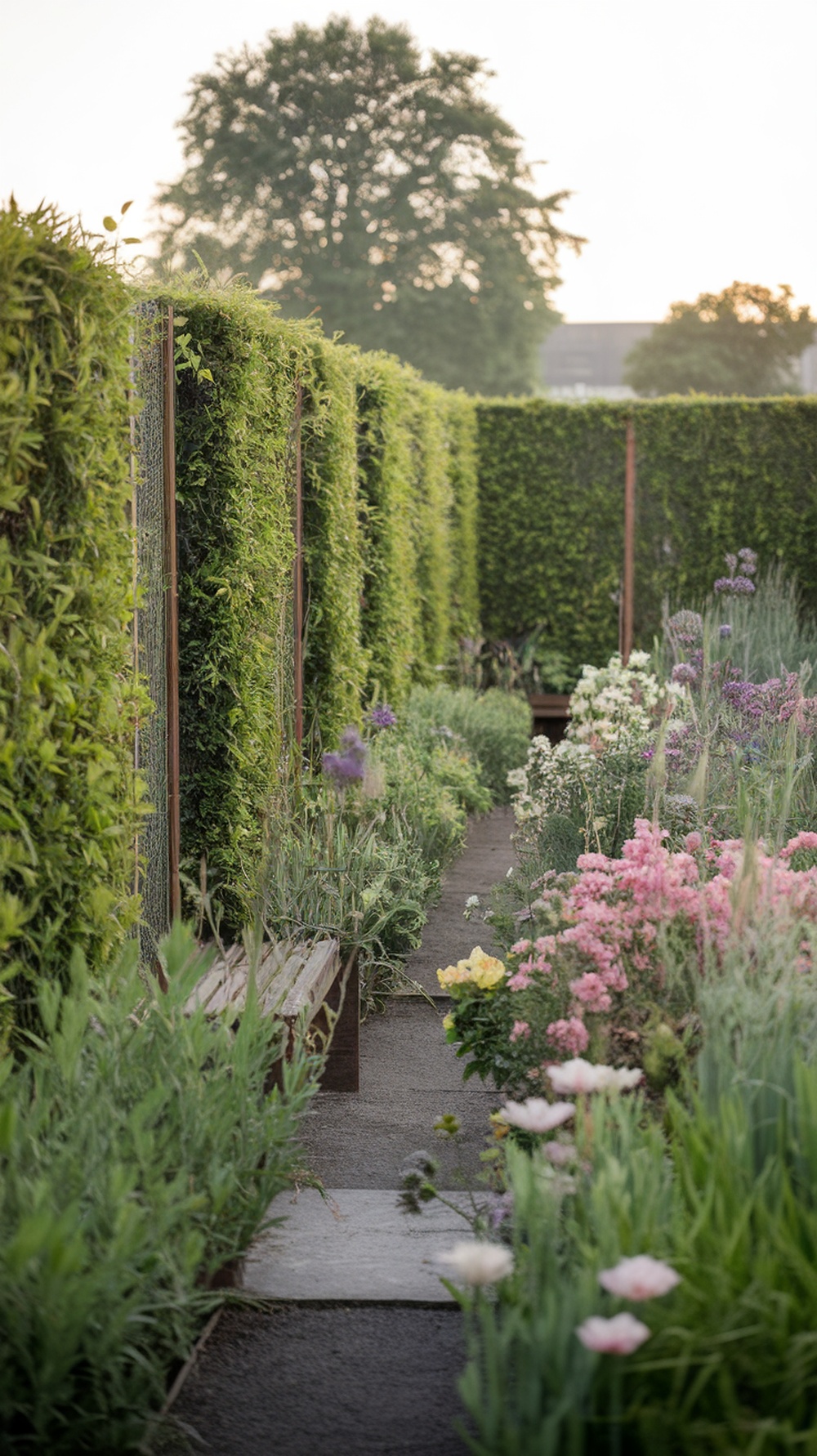
Living fences are a fantastic way to add both beauty and functionality to your garden. The image shows a pathway bordered by lush greenery, creating a natural barrier that enhances the garden’s charm. These fences not only provide privacy but also serve as a habitat for local wildlife.
Incorporating benches, like the ones seen in the image, invites relaxation and contemplation. Imagine sitting there, surrounded by vibrant flowers and greenery. It’s a perfect spot for enjoying a morning coffee or reading a book. The combination of living fences and seating areas creates a cozy nook in your garden.
Mixing different plants along the fence can also add visual interest. The colorful blooms in the foreground contrast beautifully with the green foliage of the fence. This blend of colors and textures makes the garden feel alive and inviting. You can experiment with various plant heights and types to create a layered look.
Lighting is another great feature to consider. Soft lights can highlight the beauty of your living fence at night, turning your garden into a magical space. Whether it’s string lights or lanterns, they can enhance the overall atmosphere.
Transforming Small Spaces with Vertical Living Fences
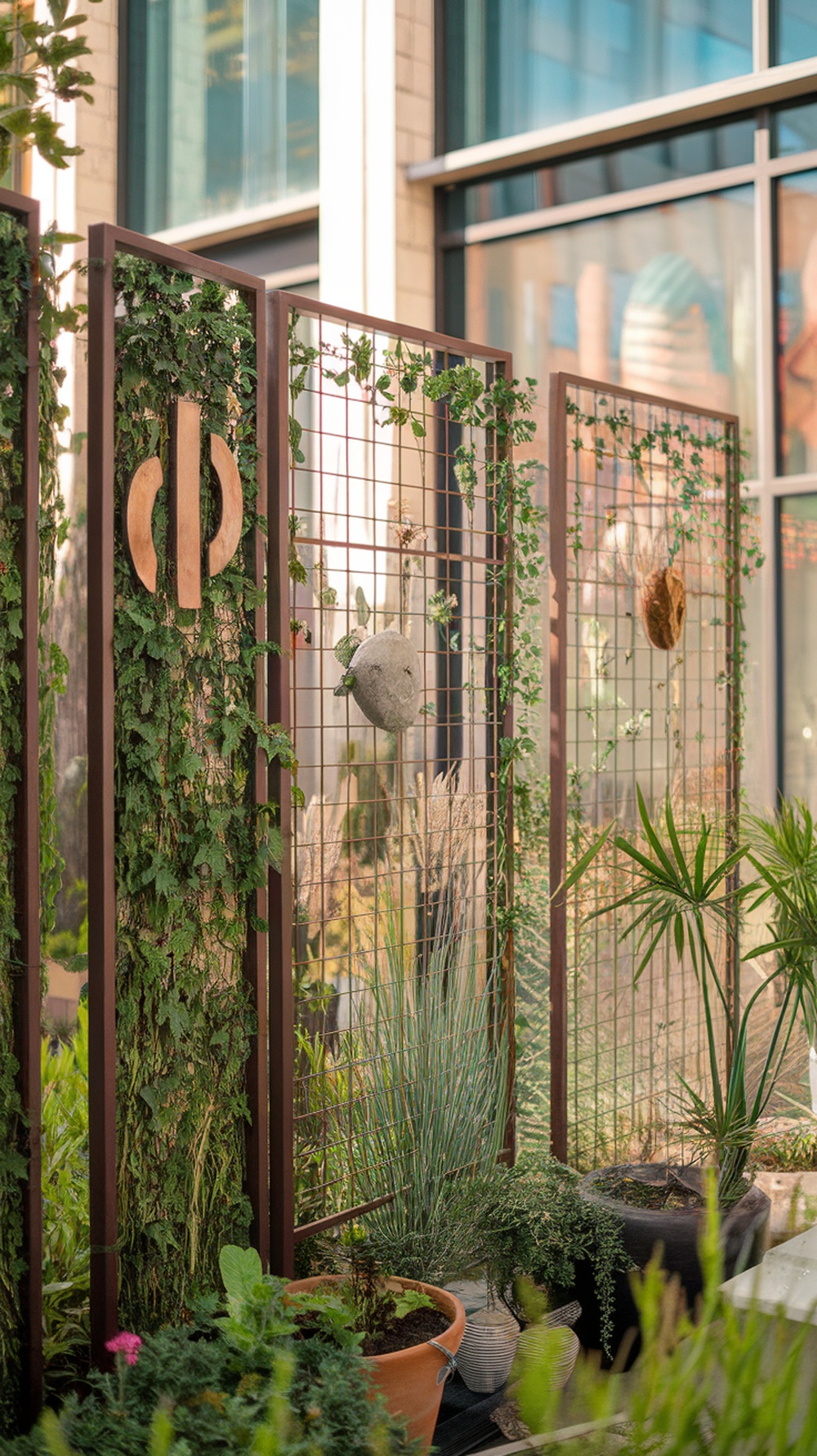
Vertical living fences are a fantastic way to make the most of small spaces. They not only provide privacy but also add a splash of greenery to urban settings. The image shows a beautifully designed vertical fence, adorned with climbing plants and artistic elements. This setup creates a natural barrier while enhancing the overall aesthetic of the area.
Using materials like metal frames and wooden accents, these fences can be both functional and stylish. The plants climbing up the structure bring life to the space, making it feel more inviting. You can choose various plants based on your climate and preferences, from vibrant flowers to lush greenery.
Vertical living fences are perfect for balconies, patios, or even small backyards. They allow you to enjoy nature without taking up too much ground space. Plus, they can act as a home for beneficial insects and birds, adding to the ecosystem of your garden.
Incorporating decorative elements, like the unique shapes seen in the image, can personalize your living fence. This not only makes it a practical addition but also a conversation starter. Whether you want to create a cozy nook or a vibrant garden, vertical living fences can transform your small space into a green oasis.
Creating a Sound Barrier with Living Fences

Living fences are a fantastic way to create a natural sound barrier. The image shows a lush green wall of climbing plants that can effectively muffle noise from nearby roads or neighbors. This type of fence not only looks beautiful but also serves a practical purpose.
Plants like ivy or other climbing vines can be trained to grow on trellises or fences. As they grow, they fill in gaps and create a dense barrier. This helps reduce sound pollution, making your outdoor space more peaceful.
Besides noise reduction, living fences offer privacy and can enhance the overall aesthetic of your yard. They attract birds and beneficial insects, adding life to your garden. Plus, they can improve air quality by absorbing carbon dioxide and releasing oxygen.
When planning your living fence, consider the types of plants that thrive in your climate. Some may require more sunlight or water than others. With the right care, your living fence can flourish and provide a beautiful, functional addition to your home.
Leave a Reply