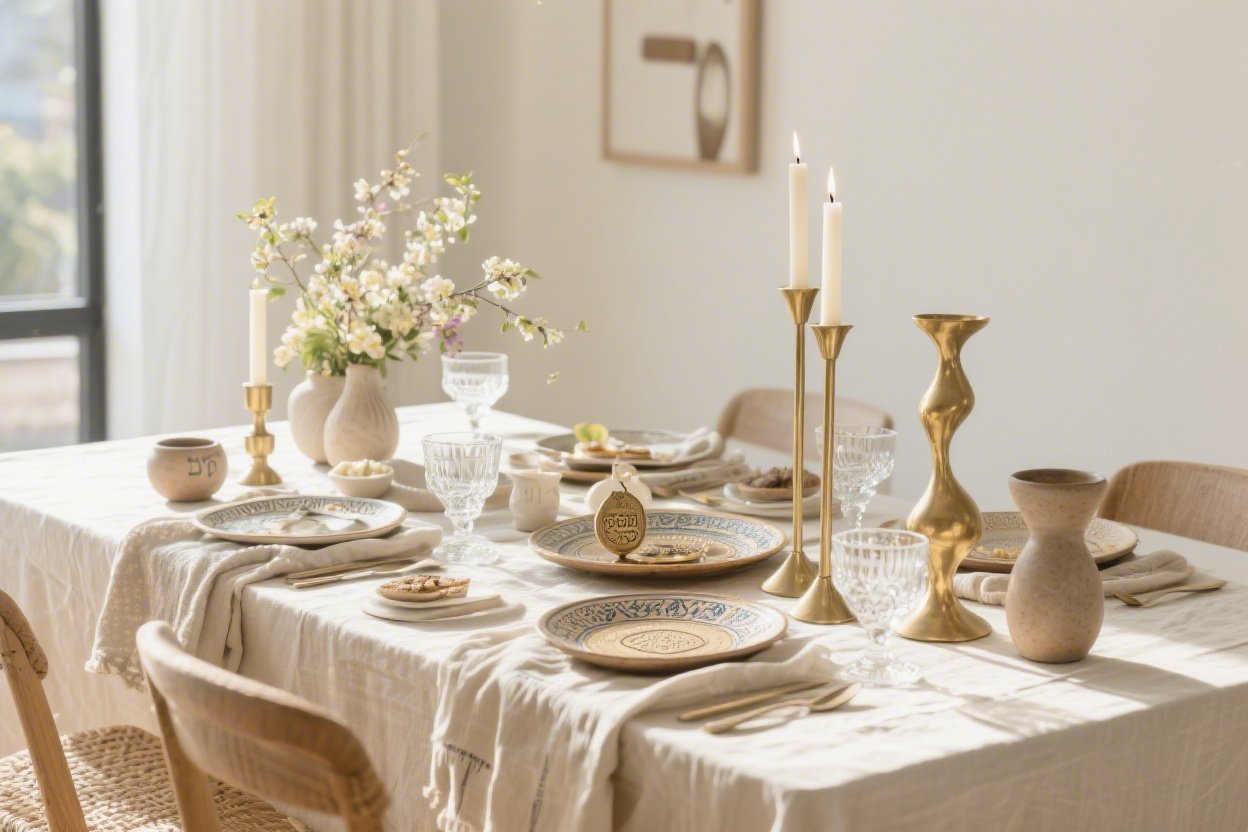
Setting the Seder table is like designing a stage for a beautiful story. The right details make the rituals feel fresh, personal, and deeply connected.
These seven designs balance tradition with style. Each one is a complete look—from linens and lighting to plates and place cards—so you can pick a vibe and bring it to life.
1. Minimalist Linen + Olive Branch Serenity
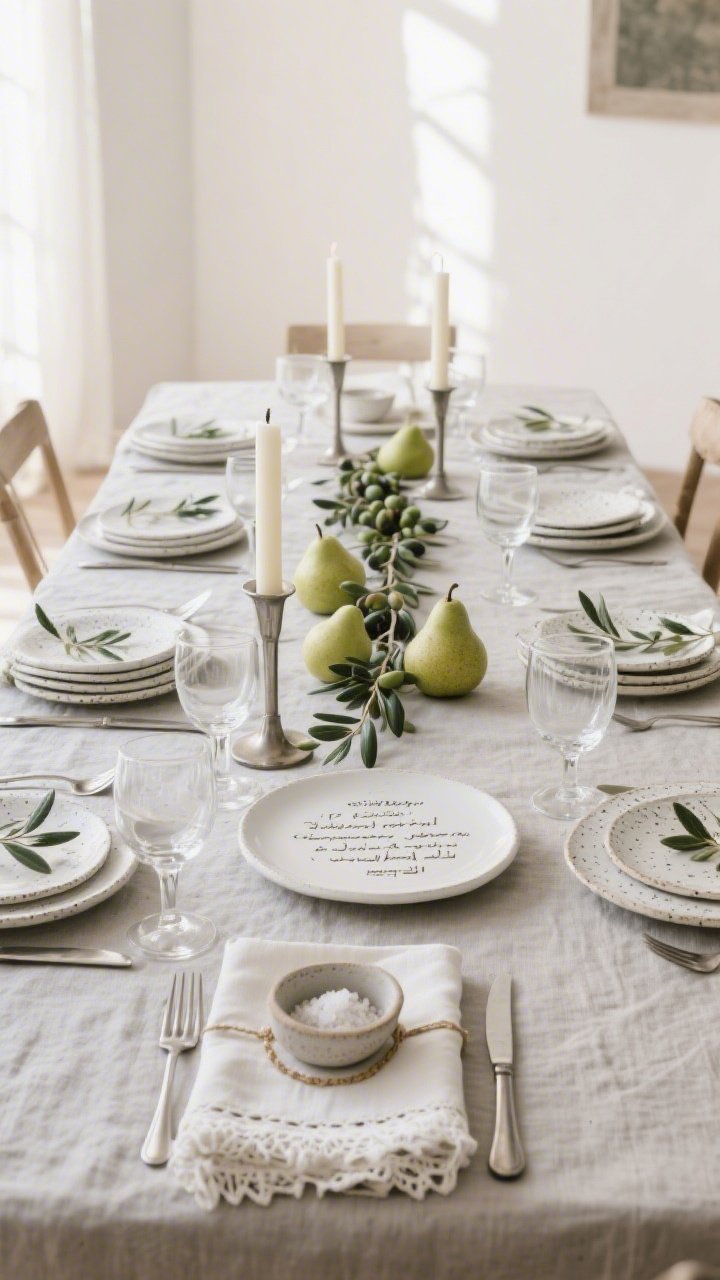
Think sun-washed simplicity with subtle symbolism. Start with a stone-colored linen tablecloth and off-white hemstitch napkins for a calm, airy base.
Layer in matte white dinner plates, small speckled ceramic salad plates, and clear stemless wine glasses to keep the look effortless. Tuck a fresh olive branch into each napkin ring as a nod to peace and renewal.
- Centerpiece: A low, elongated line of olive clippings with a few pale green pears for soft color.
- Seder Plate: A hand-thrown white ceramic platter with minimal labels in delicate script.
- Candles: Tall, ivory taper candles in brushed nickel holders—clean, tall, and timeless.
Keep the flatware brushed stainless, and place a small sea-salt pinch bowl near each setting. The overall mood is fresh, refined, and quietly meaningful.
2. Desert Modern With Terracotta Warmth
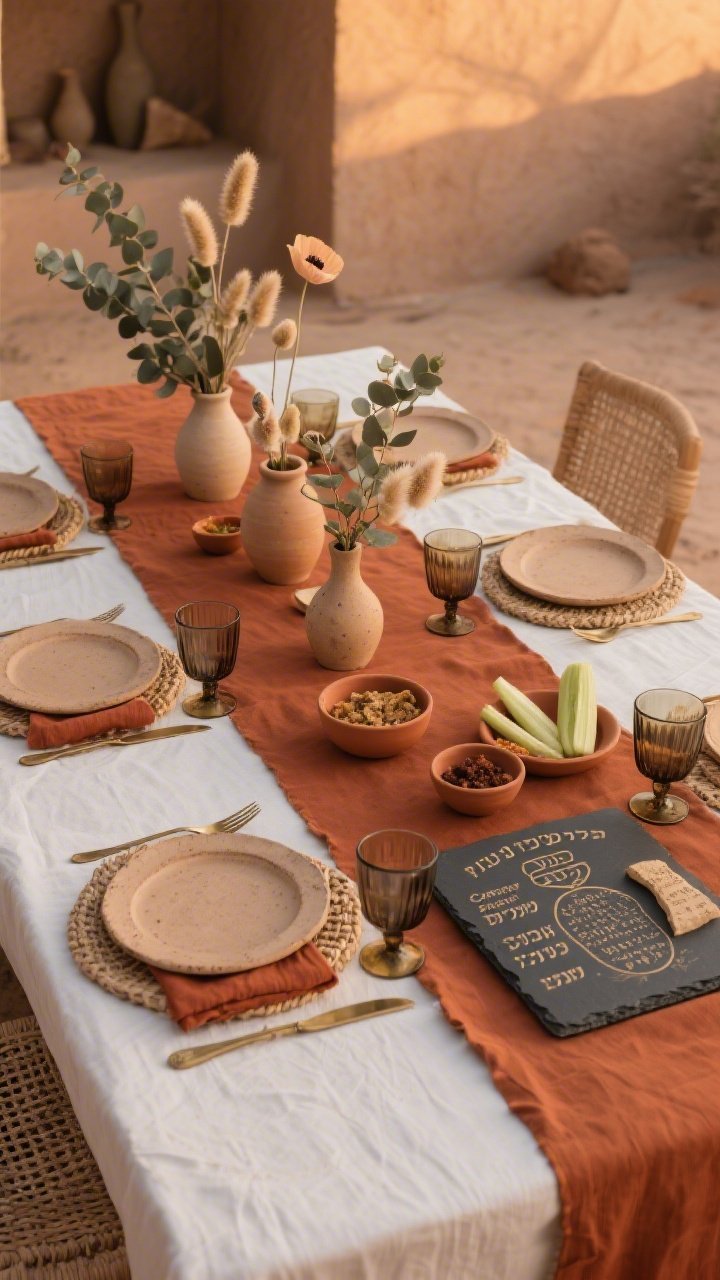
If you love earthy tones, this one sings. Ground the table with a terracotta runner over a crisp white cloth and add sand-colored stoneware plates with a raw, unglazed edge.
Mix textures: reed placemats, linen napkins in rust or clay, and antique brass flatware that catches candlelight. Sip from smoky glass goblets to deepen the palette.
- Centerpiece: Scattered low ceramic bud vases with eucalyptus, dried bunny tails, and a few pale poppies.
- Seder Plate: A slate board with labeled ceramic dishes—modern, tactile, and grounded.
- Accents: Small terracotta bowls for charoset and maror at intervals along the table.
The overall vibe feels like a quiet evening in the Negev—warm, elemental, and beautifully modern.
3. Lucite Glow: Acrylic, Glass, and Floating Greens
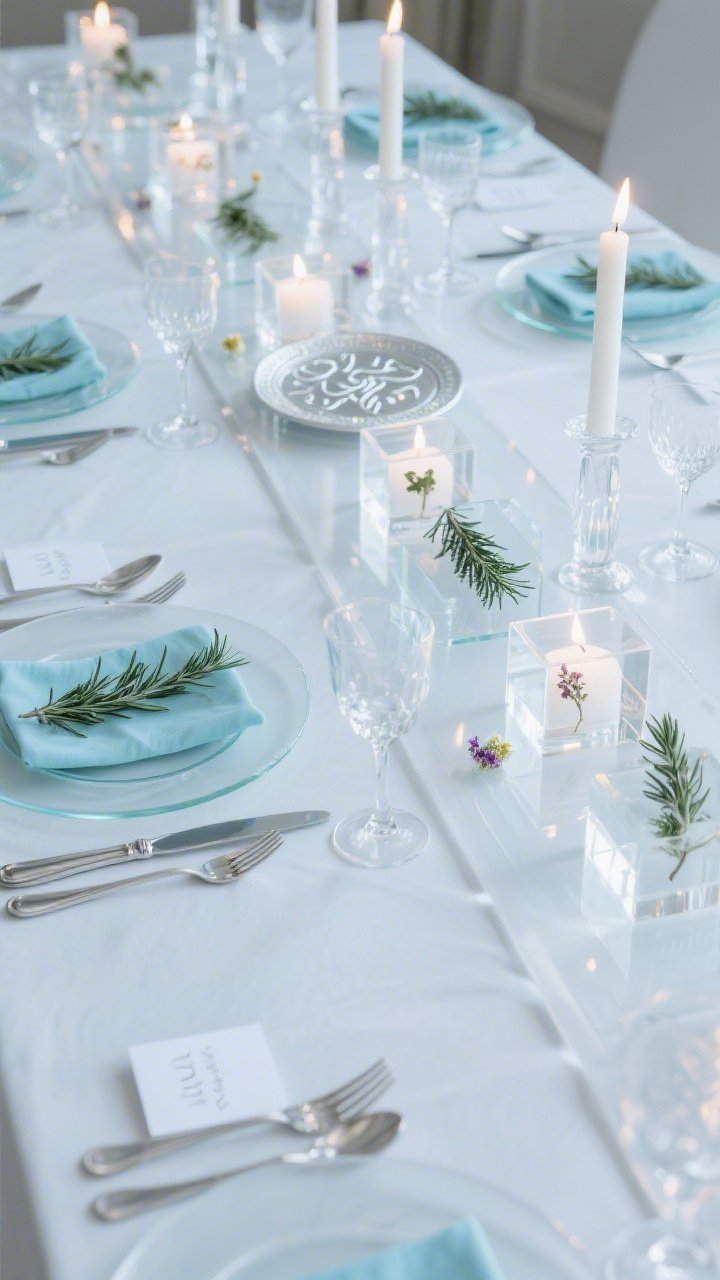
This one’s all about light and levity. Lay a clear acrylic runner at the center and stack glass chargers under translucent frosted plates for that floating effect.
Napkins in a soft sea-glass blue sit beside sleek chrome flatware, while crystal coupe glasses add sparkle without fuss.
- Centerpiece: A row of acrylic blocks displaying sprigs of rosemary, fern fronds, and tiny pressed flowers.
- Seder Plate: Lucite with etched symbols, illuminated by concealed LED tea lights.
- Candles: Clear candlesticks with white tapers, creating a barely-there glow.
Place cards float inside mini acrylic frames with white ink. The result feels ethereal, innovative, and perfect for a high-design home.
4. Blue-and-White Heritage Remix
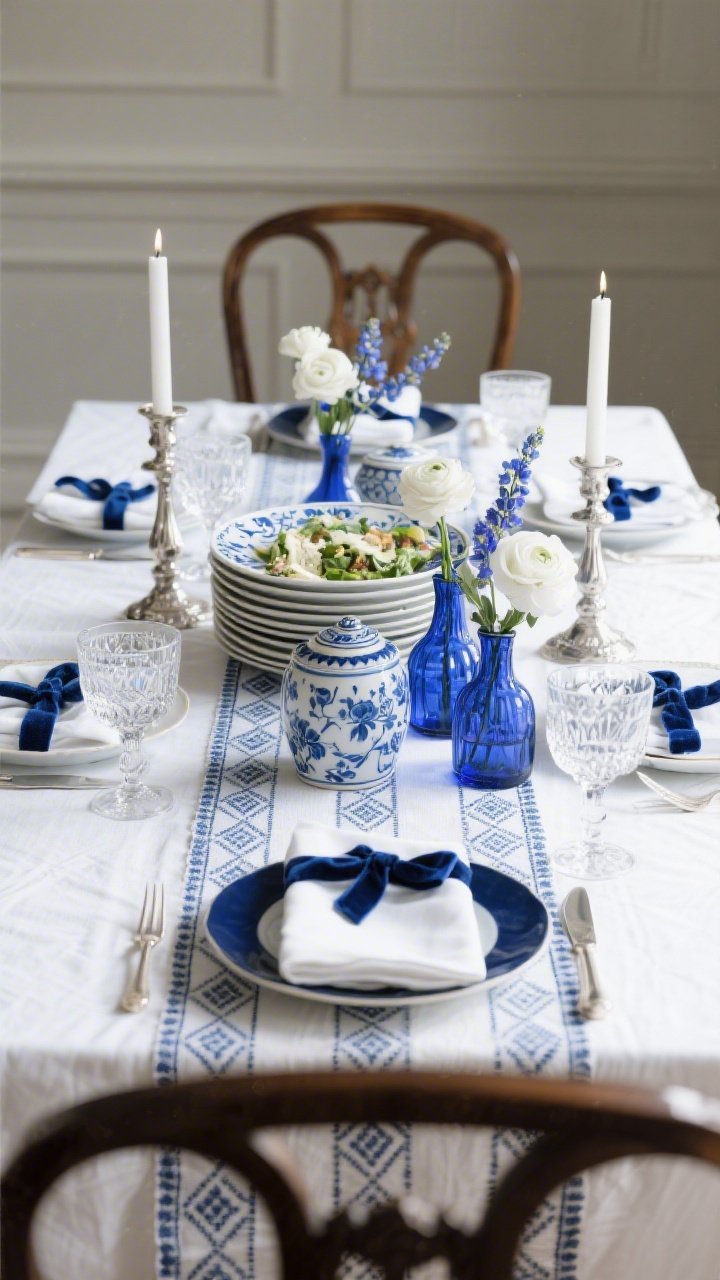
Classic, but make it fresh. Start with a white tablecloth and add a narrow indigo runner patterned with small geometrics—subtle nods to tradition without going full print overload.
Use mix-and-match blue-and-white china for personality. Stack a navy plate under a delicate floral salad plate and tie crisp white napkins with a thin blue velvet ribbon.
- Centerpiece: A cluster of ginger jars and blue glass bud vases with white ranunculus and delphiniums.
- Seder Plate: Hand-painted porcelain with cobalt detailing—artful and heirloom-worthy.
- Candles: Silver candlesticks with white tapers to keep things bright and balanced.
Sprinkle in cut-crystal wine glasses for sparkle. This look feels storied yet current, like your grandmother’s favorites reimagined for right now.
5. Botanical Lab: Fresh Greens and Scientific Chic
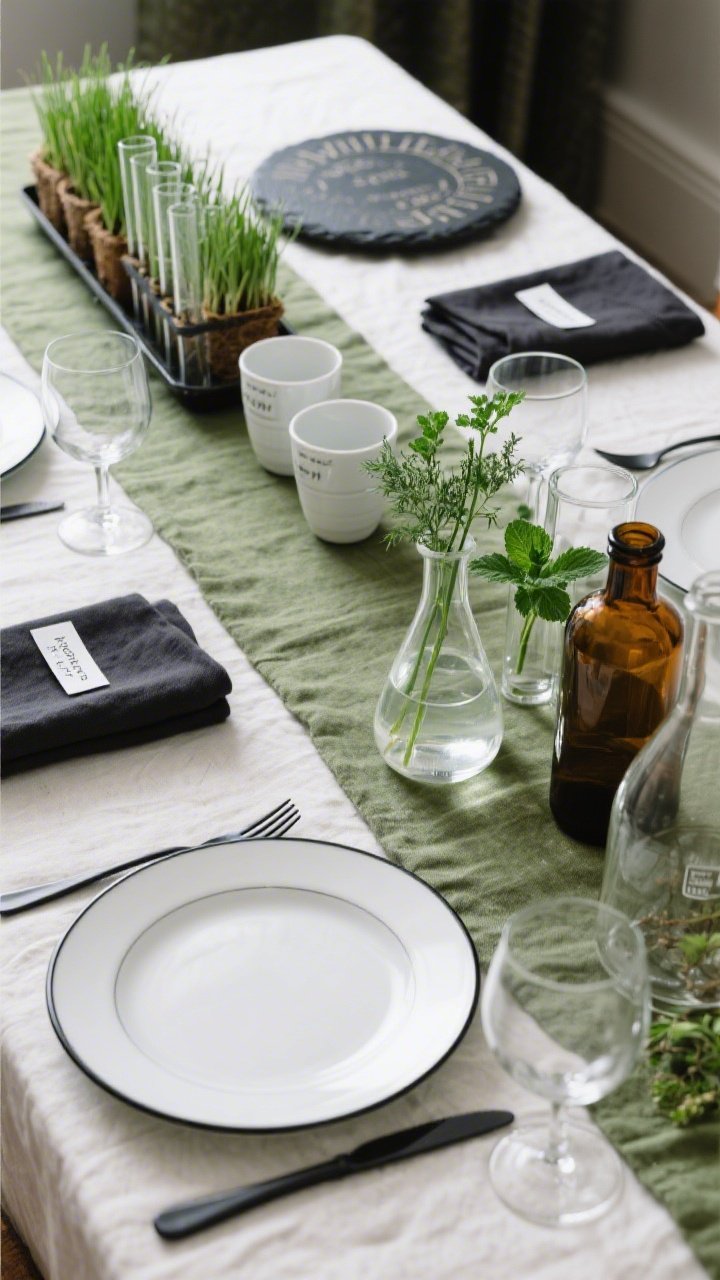
For the design lover who also appreciates a concept, this one thrills. Start with a moss-green linen runner over a natural cotton cloth and white plates with a thin black rim.
Swap standard vases for glass beakers and test tubes, each holding single stems of parsley, dill, and mint—herbs that nod to the Seder’s symbols.
- Centerpiece: A long tray of potted wheatgrass with test tubes tucked in like a micro-garden.
- Seder Plate: A black slate circle with labeled white ceramic cups—think bold contrast and clean typography.
- Details: Amber apothecary bottles for water, charcoal linen napkins, and brushed black flatware.
Use clear wine stems and small lab labels as place cards. The result feels curious, fresh, and surprisingly elegant.
6. Candlelit Neutrals With Sculptural Drama
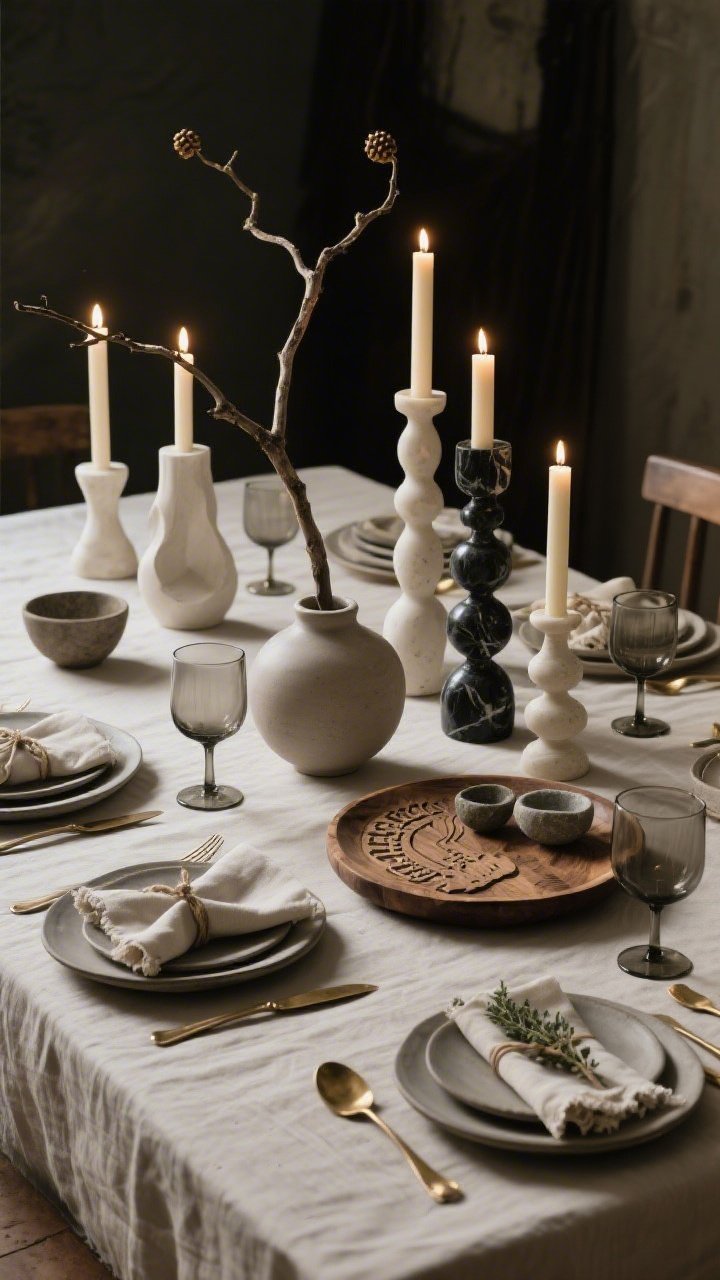
Moody and modern, this look plays with height and shadow. Go for a bone-colored linen tablecloth and greige stoneware plates with a satin finish.
Layer on sculptural candleholders—some tall, some stubby—in alabaster, black marble, and plaster. Add beeswax tapers in tonal neutrals for depth.
- Centerpiece: A cluster of asymmetrical ceramic forms and a single large branch in a matte vase.
- Seder Plate: A hand-carved wooden charger with small stone bowls—warm, tactile, and soulful.
- Textiles: Raw-edge napkins tied with linen twine and a sprig of thyme or rosemary.
Finish with smoked glass wine goblets and antique brass flatware. It’s intimate, artful, and absolutely glow-y when the lights go down.
7. Contemporary Color Pop: Citrus and Coral Joy
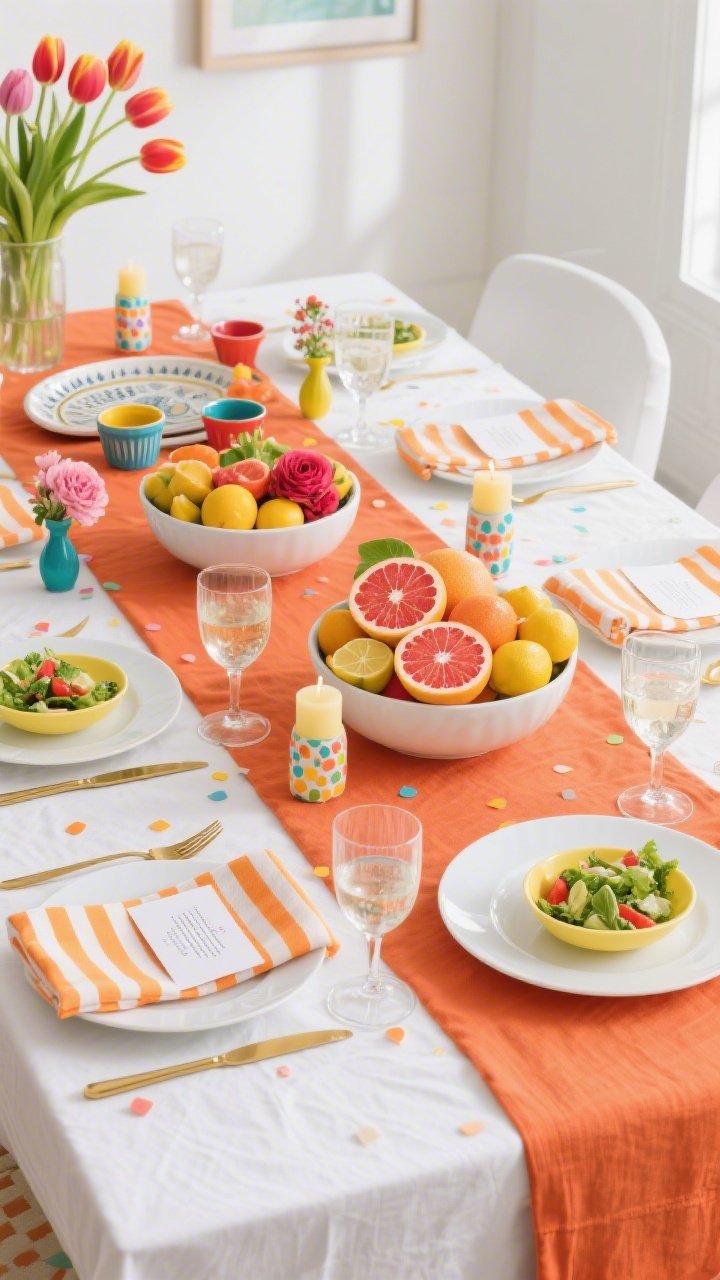
Lean into celebration energy. Set a crisp white cloth and run a papaya-colored linen runner straight down the middle. Plates go playful: white dinnerware topped with coral or citron salad plates.
Bring in gold flatware for glam and clear coupe glasses for wine. Fold striped napkins in sunny hues and tuck in a small card with a short reading or question to spark conversation.
- Centerpiece: Bowls of citrus fruits—grapefruits, lemons, blood oranges—interspersed with bright tulips and ranunculus.
- Seder Plate: A glossy white platter with colorful ceramic ramekins—each labeled in bold sans serif.
- Accents: Confetti-style glass candleholders and tiny painted bud vases in mismatched brights.
The effect is modern, fun, and family-friendly—perfect for a lively, multigenerational table.
Final tip: Whatever style you choose, let the symbolic items lead and the design support their meaning. With thoughtful layers—color, texture, light—you’ll craft a Seder that feels both modern and deeply meaningful, and absolutely beautiful in photos and in memory.
Leave a Reply